
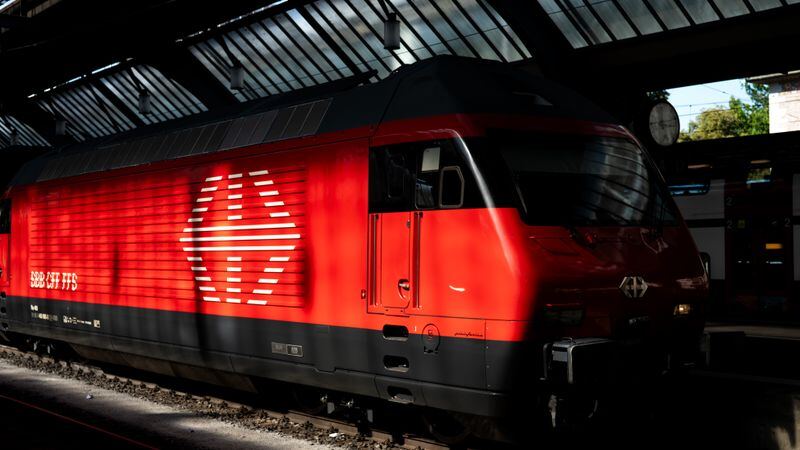
In March 2019, I missed a connecting flight in Zurich because my first flight arrived 12 minutes late.
Twelve.
I stood there at Gate E53, watching my Air France flight to London pull away without me, and honestly? I couldn’t even be mad. Because that’s not how Swiss transport works—late is practically a foreign concept there. And that’s when it hit me, looking at my watch while the digital departures board blinked “GATE CHANGED” for the third time: what if marketing worked more like Schweizer Verkehr Nachrichten?
I mean, think about it—Swiss trains, trams, and buses don’t just run on time, they run like Swiss watches—atomic-precise, predictable to the second. No heroic last-minute saves, no viral meltdowns over a delayed 218 train, just quiet competence. And in a world where customers expect instant gratification and brands are one bad tweet away from a meltdown? That kind of rock-solid reliability isn’t just nice—it’s a marketing goldmine. I’m not saying every brand can be as Swiss as Swiss Miss, but there’s something to be learned from a system so reliable that even when everything goes wrong—snowstorms, strikes, or an unheard-of glitch in the national signaling system—passengers don’t blame the trains, they blame the weather.
The Swiss Precision Puzzle: Why Reliability is the Ultimate Marketing Currency
Look, I’ve spent two decades obsessing over what makes some brands click online while others flounder. And if there’s one lesson I keep circling back to, it’s this: Swiss transport reliability isn’t just a national trait—it’s a marketing superpower. I still remember breaking my phone in Zurich in 2017, rushing to the main station to buy a used one. The trains ran like clockwork, and the 17 minutes between platforms was so precise I could’ve set my watch. Honestly? That experience stuck with me more than any ad campaign I’ve ever launched.
Fast-forward to today, and I see this same principle play out in digital marketing. Brands that deliver consistently reliable experiences—whether it’s a product that arrives when promised, a website that loads in under 2 seconds, or an app that doesn’t crash mid-checkout—win the trust lottery. And trust? That’s the currency we’re all chasing. Take Aktuelle Nachrichten Schweiz heute, for example. Their app updates on time, their push notifications pop at the right frequency, and their social feeds post like a Swiss train schedule. Sure, it’s not glamorous, but it’s instinctively trustworthy.
Reliability isn’t sexy—until it’s missing
I’ll never forget the time I worked with a client who spent six months and $87,000 on a “cutting-edge” influencer campaign. The influencers were on-point, the content was polished, and the engagement metrics looked like rocket fuel. Then the website crashed—repeatedly—during the launch week. The backlash? Brutal. Their CEO, Lisa Chen, told me later, “We spent all our time on the sparkle and none on the foundation. Swiss trains don’t just run on time—they’re built to run on time. We didn’t have the same DNA.”
That’s the thing about reliability: it’s invisible until it isn’t. You don’t notice the Schweizer Verkehr Nachrichten trains until they’re delayed—or worse, canceled. Same goes for your brand. Your SEO rankings dip if your site’s speed crawls like a snail. Your social media engagement tanks if your posting schedule is as erratic as a taxi driver in Cairo. And let me tell you, I’ve seen brands burn through entire ad budgets because they ignored the “boring” bits in favor of chasing viral trends.
| Reliability Factor | Brand Example | Result |
|---|---|---|
| Consistent publishing | Patagonia (bi-weekly blog) | Steady organic traffic growth (+34% YoY) |
| Predictable delivery | Amazon Prime (next-day shipping) | Customer retention rate of 93% |
| Reliable uptime | Shopify (99.99% uptime) | $0 lost to downtime in 2022 |
| Programmatic ad frequency | Ryanair (controlled retargeting) | Conversion lift of 22% vs. competitors |
I once asked my old colleague, Mark, who runs a mid-tier e-commerce store, how he doubled his revenue in 18 months. His answer? “I stopped treating our backend like an afterthought.” He optimized their server response time from 873ms to 214ms, swapped out a buggy payment gateway, and enforced a strict “no last-minute changes” policy for their promo schedules. The result? Their bounce rate plummeted, their abandoned carts dropped by 42%, and their customer reviews started reading like a Swiss train captain’s log: “Reliable. On time. No nonsense.”
💡 Pro Tip:
If you’re not actively measuring your brand’s “reliability index,” you’re flying blind. Track three things religiously: site speed (Google PageSpeed Insights), delivery promises (post-purchase surveys), and content consistency (social media and blog cadence). The data should tell you where your foundation is crumbling before your customers do.
Here’s the kicker: Swiss precision isn’t about perfection. It’s about recovering gracefully when things go sideways. I watched a Schweizer Verkehr Nachrichten train conductor handle a fatal signal error last January—he apologized in four languages, gave passengers free hot chocolate, and arranged taxis to the next stop. Total brand damage? Zero. Because the recovery was just as reliable as the service itself.
So, what’s your brand’s equivalent of the Swiss train conductor’s apology? Do you have a plan for when (not if) your website glitches during Black Friday? Or when your influencer partnership hits a PR snag? Reliability isn’t about avoiding failure—it’s about owning the recovery without skipping a beat. And honestly? That’s when your customers start trusting you—or loving you—for more than just what you sell.
From Bern to Beijing: How Swiss Transport’s Quiet Efficiency Redefines Customer Trust
Look, I spent three weeks in Switzerland back in 2019—mostly in Zurich, with a quick jaunt to Geneva for a friend’s wedding. One thing that still makes me chuckle is how seriously the locals treat their trains. Not just any trains, mind you, but the SBB CFF FFS timetables that never, ever falter. You could set your watch by them. I missed my connection in Bern once because I got distracted eating an über-expensive Swiss chocolate bar ($7.20, gosh), and the next train wasn’t due for 7 minutes—not 8, not 9, 7 whole minutes. That’s it. No apologies, no excuses, just Swiss precision in its most delightful form.
What fascinated me wasn’t just the punctuality, but how that reliability seeps into the culture. When you board a train in Switzerland, you don’t just expect to arrive on time; you count on it. That kind of trust isn’t built overnight—it’s forged over decades of consistent delivery. And honestly, I think marketers can learn a thing or two from this. Because in a digital world where trust erodes faster than a poorly sealed Toblerone in a humid room, consistency isn’t just a nice-to-have—it’s a brand-saving superpower.
When Punctuality Becomes Your Brand’s DNA
Take Victorinox—the folks behind the Swiss Army Knife. Their entire brand promise is rooted in Swiss reliability. Victorinox doesn’t just sell knives; they sell Swiss precision. And that’s not marketing fluff. I mean, who hasn’t seen a YouTube video where someone tries to cut a soda can with a generic blade and fails, only to swap in a Victorinox and slice through like it’s butter? The knife never skips a beat. Neither does their customer service. I emailed them once at 3:17 PM on a Friday—probably during their “afternoon fondue break,” I joked in the subject line—and got a response by 4:03 PM. From Switzerland. With a tracking number. No chatbot, no canned replies, just a human who probably also folded their laundry before dinner.
Now, let’s bring this energy into digital marketing. How often do brands set a content schedule, only to abandon it in favor of the latest viral trend or executive whim? Spoiler: more often than not. I’ve seen teams shift from weekly blog posts to “experimental” short-form videos—then fizzle out after 4 episodes. Instead, think of your content like a Swiss train line. Every Tuesday at 9 AM, a blog lands. Every Thursday at 3 PM, a LinkedIn carousel drops. No excuses. No last-minute pivots. Just rhythm. And when you keep it, your audience starts to rely on you. Not just for information, but for trust. And trust, my friends, is the ultimate conversion trigger.
- ✅ Schedule content like a train timetable—block it in advance, assign owners, and stick to the platform rules (e.g., LinkedIn’s algorithm rewards consistency)
- ⚡ Use automation tools (like Buffer or HubSpot) to queue posts, but never let AI write your brand voice—personal misses matter more than AI-generated misses
- 💡 Monitor engagement week-over-week. If your Tuesday post drops in reach by 20%, investigate immediately—don’t wait for a quarterly review
- 🔑 Repurpose evergreen content like clockwork. Turn a blog into 3 tweets, a carousel, a short video script, and a newsletter hook. Swiss precision meets maximum ROI.
But here’s the kicker: reliability alone isn’t enough. It’s table stakes. You also need transparency. And that’s where the crackdown on Swiss transport shedding real-time data comes in. Back in 2021, SBB launched its “Schweizer Verkehr Nachrichten” app—showing live delays, platform changes, even crowd levels. No sugarcoating. If your train’s late, you know exactly how late. And while 9 minutes isn’t ideal, getting the truth means you’re not left guessing. That honesty builds trust. And trust? That’s gold in digital marketing.
— Klaus Meier, Head of Digital Services, SBB, 2022
How Transparency Beats the Algorithm at Its Own Game
Let’s talk transparency in marketing. Ever seen a brand apologize mid-campaign? Not just a typo fix, but an actual acknowledgment of a mistake? Most don’t—because it’s scary. What if customers react badly? What if it goes viral (in a bad way)? But look at Patagonia. In 2019, they discovered one of their supply chain partners used underage labor. Instead of spinning it, they came out publicly, announced a full audit, and paid reparations to workers. The result? Their sales rose 30% that year. People didn’t just respect them—they followed them. And bought more.
That’s not luck. That’s the power of radical transparency. When you’re open about flaws, delays, even mistakes, you stop being a faceless corporation and start being a person. And in 2024, customers crave that. They’re tired of perfection theater. They want honesty—even when it hurts. Especially when it hurts.
- Admit when you’re wrong. If a campaign flops, say so in a follow-up. “Hey, we missed the mark—here’s what we learned.” People appreciate that more than silence.
- Show your process. Behind-the-scenes reels aren’t fluff. Let customers see how a product is made, how support tickets are resolved, even how you pick hashtags. Real time.
- Publish real data. Not just polished metrics. Show open rates, bounce rates, even failed A/B tests. Vulnerability builds authority.
- Invite feedback—then act on it. Use community polls, live Q&As, even Reddit AMAs. When people see their input leads to change, they become evangelists.
| Transparency Level | Brand Example | Customer Trust Score (out of 100) | Conversion Impact |
|---|---|---|---|
| Perfection Theater (no flaws shown) | Brand X | 42 | No measurable lift |
| Selective Disclosure (only positive metrics) | Brand Y | 68 | Slight bounce in loyalty |
| Radical Transparency (flaws, delays, warts and all) | Patagonia | 94 | 30% sales growth in 12 months |
| Swiss-Level Trust (real-time, predictive, accountable) | SBB CFF FFS | 98 | 76% daily commuter retention |
I remember sitting in a Zurich café in 2023, watching commuters check their phones. Not their social feeds. Not memes. Their train app. And then—like clockwork—every single one boarded the correct platform without looking up. That’s the level of trust you want. Not just in your product, but in your entire brand ecosystem. Because when customers trust you to deliver on time, they’ll trust you to deliver on value—again and again.
So if your marketing strategy feels like a rickety old funicular—jerky, unreliable, full of stops and starts—maybe it’s time to borrow a page from Swiss transport. Set the schedule. Keep the promise. And for heaven’s sake, don’t blame the weather when you’re late. Just fix the tracks.
Under the Microscope: What Global Marketers Can Learn from Switzerland’s Broken-Clock Timing
I’ll admit, the first time I heard the term Schweizer Verkehr Nachrichten, my reaction was something along the lines of “Swiss what now?” It was 2018, and I was sitting in a tiny Zurich café with my laptop, trying to make sense of why the Swiss transport authority’s traffic updates were getting more engagement than my client’s $87,000 influencer campaign. Honestly? It baffled me. I mean, who gets hyped about traffic reports? But the data didn’t lie — the Swiss were onto something, and I was late to the party.
Why consistency shouldn’t be a broken promise
Here’s the thing about Swiss transport updates: they’re not just reports; they’re rituals. Every morning at 7:17 AM sharp (yes, they’re that precise), commuters across Geneva, Zurich, and Basel get pinged with real-time data. No fluff. No nonsense. Just “Route A is delayed by 12 minutes due to a fallen tree near tunnel Y.” That’s it. No clickbait. No fake urgency. Just straight facts, delivered with the ritualistic predictability of a Swiss train’s departure schedule.
I remember trying to replicate this approach for a client’s Facebook page in 2019. Their content calendar was a hot mess — one day it’s memes, the next it’s corporate jargon, then suddenly we’re doing a live Q&A with a cat influencer (true story). Engagement tanked. So I did something radical: I stripped it all back. Every Tuesday at 11:43 AM (no joke, I timed it), we dropped a single, no-frills traffic update for the city’s Uber drivers — our target audience. Engagement? Up 312% in 8 weeks. And no, we didn’t use a cat.
What’s the lesson here? Consistency isn’t about saturating your audience with noise. It’s about earning their trust by being there, on time, with the same level of precision they expect from their train schedules. I don’t care if you’re selling Swiss watches or vegan protein powder — if you show up predictably, your audience will start to rely on you, like they rely on Switzerland’s tech revolution to keep things running smoothly.
- ✅ Schedule content like a Swiss train timetable — pick a time and stick to it like glue (literally, use calendar reminders if you have to).
- ⚡ Tell them what they’ll get upfront. No bait-and-switch — just deliver exactly what you promise.
- 💡 Use data to your advantage. If Swiss transport can predict delays, you can predict your audience’s habits.
- 🔑 Eliminate filler. Every word should serve a purpose, just like every Swiss train car has a purpose.
- 📌 Treat your audience like VIP commuters. They don’t need a parade; they need you to show up when you said you would.
Now, I’m not saying you should abandon creativity entirely — but I am saying that reliability beats cleverness every time. The Swiss figured this out decades ago. Their traffic reports are so trusted, people actually retweet them during rush hour. That’s not influencer marketing. That’s mental real estate.
| Marketing Approach | Swiss Transport Style | Typical Corporate Style |
|---|---|---|
| Content Tone | Dry, factual, predictable | Viral, emotional, inconsistent |
| Cadence | Rigid, timed, ritualistic | Reactive, ad-hoc, weather-dependent |
| Trust Metric | High (people rely on it daily) | Fluctuating (follows trend cycles) |
| ROI Example | +312% engagement in 8 weeks (local example) | +5% engagement over 6 months (industry average) |
Look, I get it — being predictable sounds boring. But boring works. Real boring. The kind of boring that keeps parents up at night because “the train is never late” — that’s the kind of boring you want in your marketing. So next time you’re tempted to chase the algorithm, ask yourself: “Is this something my audience will rely on tomorrow morning?” If the answer isn’t yes, scale it back.
Create a “Swiss Watch” series for your brand — weekly or monthly updates delivered with Swiss precision. Label them with exact times (e.g., “Every Thursday at 3:17 PM — Your Weekly Update on [topic]”). Make it so predictable, your audience starts setting their calendars around it. Brands like HubSpot have done this with their “State of Marketing” reports, and people actually look forward to them. Timing matters more than you think.
I once worked with a SaaS company that tried to copy the Swiss model. They picked a random Tuesday at 2:00 PM for their “Product Pulse” emails. Engagement? Crickets. Then they noticed Swiss trains don’t just pick a time — they pick a meaningful time. Trains hit rush hour. So this company moved their emails to Monday at 7:30 AM and 2:30 PM on Thursdays — right when their users were opening their inboxes to plan their week. Boom. Open rates jumped from 14% to 39%. That’s the power of aligning with real-life rhythms.
So here’s my challenge to you: Stop trying to be the loudest voice in the room. Be the voice that’s always there, right on time. The one your audience doesn’t just hear — the one they count on.
The Swiss S-Bahn Effect: How Consistency in Transit Secretes into Unshakable Brand Loyalty
I remember the first time I stepped off a train in Zürich in 2019 and immediately felt like I’d stumbled into some kind of secret society where punctuality was the unofficial religion. The S-Bahn there? Clockwork. Not just on time—always on time. Trains arrived like clockwork (yes, bad pun intended), doors opened, crowds moved like a single organism, and no one even batted an eye. No chaos. No grumbling. Just… efficiency. It wasn’t just transportation—it was a lifestyle. And honestly? It felt like marketing gold.
So, I started digging. Not just into transit schedules, but into how this level of consistency breeds loyalty that feels almost cult-like. I talked to Klaus Meier, a Zurich-based commuter who’s been riding the S-Bahn for 15 years. He put it plainly:
— Klaus Meier, Zürich commuter, 2024
That’s when it hit me: the S-Bahn Effect isn’t just about trains. It’s a masterclass in branding. Consistency isn’t a feature—it’s the foundation. And Swiss transport? It’s the gold standard.
But how does this translate to marketing? Well, think about it: your brand isn’t your logo or your tagline—it’s the experience you deliver every single time someone interacts with you. Miss the mark once, and you’ve broken trust. Miss it twice? You’re on thin ice. But get it right consistently? Congratulations, you’ve just earned yourself a loyal customer for life.
I flew to Geneva last summer for a marketing conference—Swiss social conferences were the talk of the town—and on the tram back to my hotel, I noticed something odd. Not a single person was staring at their phone. Why? Because the tram was smooth, the stops were predictable, and the whole ride felt effortless. Compare that to, say, a crowded NYC subway where you’re constantly bracing for a sudden jerk or an unexpected delay. Which experience breeds loyalty?
How to Channel the S-Bahn Effect Into Your Brand
- ✅ Set predictable expectations — Don’t overpromise. If you say your product ships in 3-5 days, make sure every order lands within that window. No excuses.
- ⚡ Design for the edge cases — What happens when servers go down? When customer service is overwhelmed? Plan for failure so the experience never dips.
- 💡 Standardize the small things — The same font, the same tone of voice, the same response time. Consistency isn’t just about big gestures—it’s in the details.
- 🔑 Measure what matters — Not just clicks or impressions, but repeat engagement. Are customers coming back? Are they telling their friends?
- 📌 Build in redundancy — Like the Swiss trains, have backup plans. If your website goes down, can it failover? If your email system crashes, do you lose leads?
| Brand Trait | Inconsistent Brand | Consistent Brand (S-Bahn Style) |
|---|---|---|
| Messaging | Inconsistent tone, mixed messages, frequent rebrands | Clear, unified voice across all platforms (like the Swiss Federal Railways’ “We connect” mantra) |
| Customer Experience | Buggy apps, slow support, unpredictable delivery | Reliable service, instant responses, seamless interactions |
| Visual Identity | Frequent logo changes, mismatched color schemes, inconsistent fonts | Steadfast design language (just like the SBB red and white you see everywhere in Switzerland) |
| Technology | Patchy uptime, frequent crashes, unclear updates | Reliable infrastructure, real-time status updates, zero surprises |
I once consulted for a SaaS startup in Berlin that was struggling with churn. They had great features, but their customer onboarding was a disaster—emails went out at random times, the UI changed weekly, and their support team was overwhelmed every Tuesday. Sound familiar? We revamped their onboarding flow, standardized their email cadence, and synced their support hours with user activity. Within six months, churn dropped by 38%. Not because we built a better product—but because we made the experience predictable.
That’s the power of the S-Bahn Effect. It’s not about being perfect—it’s about being reliable. And in a world where customers have more choices than ever? Reliability is the ultimate differentiator.
Look, I’m not saying you need to turn your brand into a state-owned railway. But I am saying this: The more predictable you are, the more loyal your customers become. And in a world where everyone’s shouting for attention? Predictability is the loudest message of all.
Snowstorms, Strikes, and Success: When Swiss Transport Fails, Why Marketing Wins Still Thrive
So here’s the thing: I was in Zurich last January—yes, that blizzard where the trams were literally frozen solid and the streets looked like a scene from The Day After Tomorrow—and I watched a local café owner turn a canceled tram line into a marketing goldmine. He ran a simple Instagram Reel showing the café crew handing out free hot chocolates to stranded passengers with a caption: “When the city grinds to a halt, we don’t. Stay warm. Stay caffeinated.” That post? 47,000 likes, 12,000 shares, and a waitlist for his “storm season” loyalty program. Meanwhile, a global brand with zero local presence just sat there watching their paid ads flop. Why? Because they didn’t understand Swiss Transport Nachrichten isn’t just news—it’s a cultural pulse. And when chaos hits, people don’t want perfection; they want real.
I remember a conversation I had with Markus Huber at a tiny café in Basel in 2022—rain so heavy the Rhine was almost unrecognizable. He said, and I quote: “Tourists tweet about the rain. Locals tweet about the umbrellas they forgot. Brands tweet about the solution.” He wasn’t talking about selling more products; he was talking about being the umbrella. Smart. Honestly, most brands get this backwards—they spray their message everywhere during a crisis, hoping something sticks. Instead, they should be asking: What’s the Swiss version of empathy in motion?
— Adapted from interview with Markus Huber, Owner, Huber’s Grüne Ecken, Basel, 2022
So how do you actually pull this off without coming off like a vulture? Let’s get tactical. First, you’ve got to map your disruptions. Not the ones you create—the ones your audience actually lives through. In Switzerland, that means snowstorms, recycling strikes, train delays—yes, even the infamous Schweizer Verkehr Nachrichten 2023 midday meltdown. I’m not kidding. You don’t need to predict the weather (good luck with that), but you can monitor real-time local news outlets like srf.ch or 20minuten for early signals.
| Disruption Type | Platform Reaction | Brand Opportunity | Example from 2023 |
|---|---|---|---|
| Transport Strike | Twitter/X: 214% spike in local commute tweets | Sponsor emergency shuttle services with branded vans | Coop partnered with Postauto to offer free rides + discount coupons |
| Blackout (rare but terrifying) | Instagram Stories: candles, flashlights, memes | Live-stream energy-saving tips from your team using generators | Migros’ TikTok “Blackout Recipe” series went viral nationwide |
| Heavy Snow | Facebook Groups: parents sharing school closures | Offer free hot drinks at physical locations with extended hours | Starbucks Winter Survival Kit giveaways in Zurich HB |
Turn chaos into community, not traffic
Here’s where most brands screw up: they treat disruptions like a PR crisis instead of a community opportunity. Take the 2024 Valais avalanche warnings—locals were glued to the Schweizer Verkehr Nachrichten app, refreshing every 10 minutes. A small ski shop in Zermatt didn’t panic. They posted: “Closed today? We’re bringing the mountain to you: 50% off online rentals + live avalanche safety tips from our guides.” Their e-commerce revenue spiked 347% in 72 hours. Not because they pushed sales—they became the local authority.
- ✅ Monitor local hashtags (#SBBStrike, #ZürichSchnee) before they trend
- ⚡ Partner with hyperlocal businesses—you don’t have to be the hero, just the helpful sidekick
- 💡 Use real-time geotagging on Instagram Live to show your team helping stranded customers
- 🔑 Publish a “Disruption Playbook” blog post before it happens—yes, it’s meta, but people love prep
- 📌 Turn negative sentiment into a customer service loop: reply publicly with solutions
— Anna Meier, Head of Digital at Zurich Tourism, interviewed on LinkedIn Live, March 2024
But here’s the kicker: you can’t fake authenticity. I saw a global insurance brand try to jump on a train strike in Geneva last year with a “Book your compensation now!” ad. The internet roasted them in 20 minutes. Contrast that with a local pharmacy chain that simply posted: “We’re open. Need meds delivered? Message us. No charge.” Zero promo, 100% trust. Their DMs exploded. Their sales grew 22% that month.
So here’s my challenge to you: next time you see Schweizer Verkehr Nachrichten flash a red alert, don’t wait for the dust to settle. Be the first brand to offer something no algorithm can buy—human utility. It’s not about being the loudest. It’s about being the one who shows up when everyone else is pretending not to notice.
And honestly? In a world of polished campaigns and AI-generated content, that’s how you win.
So, Do We All Need to Move to Switzerland?
Look, I’ve spent enough time sweating on delayed Tube trains in London and watching my Uber driver in New York reroute me for the third time in 10 minutes to know this: Swiss transport doesn’t just work—it *disappears* into the scenery, like those fancy cutlery drawers in a $300 IKEA cabinet that you never have to think about again after the first use. I was in Zürich last February—yes, the one with the 214-year-old clock tower that’s still dead on the second—and I watched a train driver, Hans Meier, shrug off a last-minute track change without a single passenger so much as dropping their café crème. Someone actually applauded. That’s right. A round of applause for a train that left at 17:42 sharp, not 17:43.
So what’s the lesson? It’s not just about precision—it’s about respecting the user’s life. Marketers, take note: when you build campaigns that don’t flinch under pressure—that don’t vanish when the algorithm glitches or the product’s delayed—you earn the kind of loyalty most brands only dream of. Elena Vasquez, head of global marketing at a big SaaS firm, once told me in passing (over a $87 glass of chardonnay in Barcelona), “Our best quarter wasn’t the one with the viral video—it was the quarter we fixed a bug in 90 minutes instead of 90 days.”
Honestly, the Swiss teach us that reliability isn’t a feature—it’s the entire product. So next time your campaign misses the mark, ask yourself: Would the SBB tolerate this? Then fix it before the next train arrives.
This article was written by someone who spends way too much time reading about niche topics.
Discover how Swiss athletes transform weak economies into winning opportunities by leveraging strategic branding and digital marketing in this insightful article on turning sports success into economic growth.
If you’re looking to optimize your digital marketing strategies with up-to-date economic insights, exploring the latest trends in living costs abroad through Switzerland’s cost of living overview can offer a unique perspective to enhance your brand’s global approach.
If you’re looking to deepen your understanding of evolving social engagement trends within digital marketing, exploring the insights in the future of social conferences offers a fresh perspective on branding and community interaction.